
Medicare Insurance Education and Enrollment
Turning 65

What Seniors Need to Know About Turning 65
Turning 65 is a significant milestone. One of the most important aspects of this age is becoming eligible for Medicare, the federal health insurance program. It’s essential to understand your options, deadlines, and available resources. Below we’ll walk you through what to expect and how to navigate this stage.
Reaching 65 is an op0portunity to take charge of your health care and plan for the future. By understanding your Medicare options, adhering to key dates and utilizing available resources, you can make informed decisions that fit your unique needs.
Medicare Deadlines & Key Dates

Initial Enrollment Period (IEP)
Your Initial Enrollment Period (IEP) is a seven-month window around your 65th birthday. It starts the three months before the month you turn 65, includes the month you turn 65, and ends three months after your birth month. Note: If your birthday falls on the 1st of the month, this window shifts (4 months before to 2 months after your birth month).
During this time, you can:
• Enroll in Original Medicare Parts A & B
• Choose a Medicare Supplement or Advantage Plan
• Sign up for a Part D Prescription Drug Plan
Automatic Enrollment
If you already receive Social Security or Railroad Retirement Board (RRB) benefits, you’ll likely be automatically enrolled in Original Medicare Parts A & B. You’ll receive your Medicare ID card in the mail about three months before your 65th birthday. If you are not receiving Social Security benefits, you must sign up for Original Medicare through the Social Security Administration.

Special Enrollment Period (SEP)
If you’re still working and have creditable health coverage through you or your spouse’s employer or union, you may qualify for a Special Enrollment Period (SEP) to sign up for Original Medicare without a late enrollment penalty after your Initial Enrollment Period (IEP) ends.
The SEP typically lasts for eight months after your employment or group coverage ends. There are many other SEP periods that typically apply to Medicare Advantage and Part D Plans including:
• You change where you live
• You lose your current coverage
• You have a chance to get other coverage
• Your plan changes its contract with Medicare
• Other special situations
The SEP category has many qualifications and exclusions. Be sure you understand how the SEP might apply to your situation before making any changes to your existing coverage.

Annual Enrollment Period (AEP)
Every year from October 15th to December 7th, you can add or make changes to your Medicare coverage, including:
• Enroll in, switch, or drop Medicare Advantage plans
• Enroll in, switch, or drop Medicare Part D Prescription Drug plans.
Medicare 101
The Basics: What is Original Medicare?
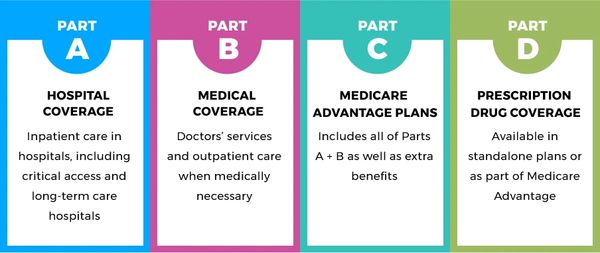
Original Medicare is a federal health insurance program primarily for individuals aged 65 and older. It also covers some younger individuals with disabilities and those with End-Stage Renal Disease (ESRD) and ALS (also called Lou Gehrig’s disease). Medicare is divided into several parts including Part A (Hospital) and Part B (Medical).

Part A – Hospital Insurance
Helps cover:
- Inpatient care in hospitals
- Skilled nursing facility care after a hospital stay
- Hospice care
- Home health care
.png/:/rs=w:600,cg:true,m)
Part B – Medical Insurance
Helps cover:
- Services from doctors and other health care providers
- Outpatient care
- Home health care
- Durable medical equipment (DME) like wheelchairs, walkers, hospital beds etc.
Original Medicare:
- Original Medicare includes Medicare Part A (Hospital Insurance) and Part B (Medical Insurance).
- You can use any doctor or hospital that takes Medicare, anywhere in the U.S.
- You can also use or shop for and buy a Medicare Supplemental plan that helps some costs that Original Medicare doesn’t cover (like the 20% coinsurance on Part B claims).
- You may join a separate Medicare drug plan to get Medicare drug coverage (Part D).
- You may choose to enroll in a Medicare Advantage plan (sometimes called Part C).
%2BBenefit%2BCh.webp/:/cr=t:0%25,l:0%25,w:100%25,h:100%25/rs=w:1240,cg:true)
To view a copy of ‘Choosing a Medicare Policy’ booklet offered by the Centers for Medicare & Medicaid Services (CMS) and the National Association of Insurance Commissioners (NAIC) Click here
Medicare Advantage

• A Medicare Advantage plan is an alternative to Original Medicare for your health and drug needs. You get benefits through a private health plan that Medicare approved. You still must pay you’re your Original Medicare Part B, but receive these benefits through the approved carrier. These "bundled" plans include Part A, Part B, and usually Part D.
• You may need to use doctors in its network and get approval for certain drugs or services.
• Usually have different out-of-pocket costs than Original Medicare, including a limit on out-of-pocket costs so you don’t need to buy supplemental coverage like Medigap.
How do Medicare Advantage plans work?
When you join a Medicare Advantage Plan, Medicare pays a fixed amount for your coverage each month to the private company offering your Medicare Advantage Plan. However, each Medicare Advantage Plan can charge different out-of-pocket costs and have different rules for how you get services (like whether you need a referral to use a specialist or whether you have to go to doctors, facilities, or suppliers that belong to the plan’s network for nonemergency or non-urgent care). These costs and rules can change each year.
Medicare Advantage plans must notify you about any changes before the start of Open Enrollment for the next year through the Annual Notice of Change (ANOC). These notices are typically mailed to you before September 30 (Open Enrollment is October 15 – December 7 every year). You can also choose to switch Medicare Advantage Plans during this time for the upcoming year.
How are prescriptions covered on a Medicare Advantage Plan?
Medicare Advantage Plans include Medicare drug coverage (Part D). In certain types of plans that don’t include Medicare drug coverage (like Medical Savings Account (MSA) plans and some Private Fee-for-Service (PFFS) plans), you can join a separate Medicare drug plan. However, if you join a Health Maintenance Organization (HMO) or Preferred Provider Organization (PPO) plan without drug coverage, you can’t join a separate Medicare drug plan.
Prescription Drug Plans
What is a Prescription Drug Plan (also known as Part D)?
Medicare Part D is an optional federal program that helps cover the cost of outpatient prescription drugs. Because Original Medicare (Parts A and B) does not include routine retail drug coverage, beneficiaries must buy a policy from a Medicare-approved private insurance company to get these benefits
Two Ways to Get Coverage
You can obtain Part D coverage through one of two plan types:
- Standalone Prescription Drug Plans (PDPs): These plans add drug coverage to your Original Medicare or Medicare Supplement (Medigap) policy.
- Medicare Advantage Prescription Drug Plans (MAPDs): These are bundled health plans (like HMOs or PPOs) that combine medical coverage (Parts A and B) and drug coverage (Part D) into a single package.
